The Story
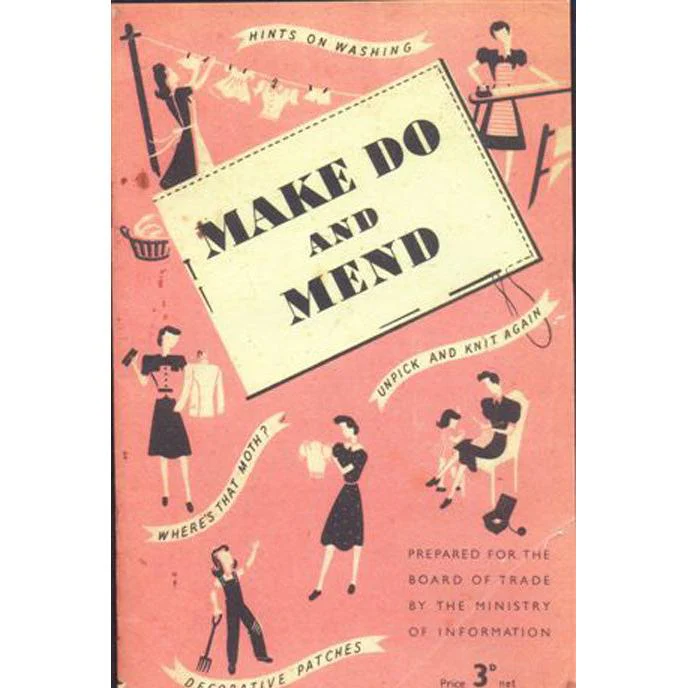
This reproduction is a faithful replica of the "Make Do and Mend" booklet issued by the Ministry of Information during the Second World War. Originally released in 1943, this manual was a critical resource for a nation facing severe clothing rationing and a shortage of raw materials. It provides a factual, no-nonsense guide to extending the life of garments, offering a direct insight into the domestic frugality and logistical ingenuity required on the British Home Front.
Product Specifications & Features
-
Original Instructional Content: Contains the full range of wartime tips for darning, patching, and "turning" old clothes to create new garments.
-
Period-Correct Format: A staple-bound booklet designed to mirror the size, layout, and paper weight of the original government-issue publication.
-
Practical Advice: Includes technical diagrams and instructions on moth prevention, laundry efficiency, and repairing knitted goods.
-
Service-Issue Quality: Printed on durable, era-appropriate paper stock that replicates the texture of 1940s stationery while ensuring longevity for handling.
Key Historical Insights
This booklet serves as a primary-source record of the civilian effort to conserve national resources:
-
Resource Management: Illustrates how the "CC41" utility clothing scheme necessitated a culture of repair to save factory capacity for military uniforms.
-
Technical Skill: Reflects the high level of needlework and repair skills expected of the average British household during the 1940s.
-
Government Propaganda: Demonstrates the shift in national messaging, where "vanity" was replaced by "utility" as a patriotic duty.
-
Economic Reality: Provides a realistic look at how families managed when "coupons" for new clothes were extremely limited.
Realistic Use Cases
In line with our army surplus UK standards for functional historical resources, this booklet is intended for:
-
Historical Reenactment: An essential, period-correct accessory for those portraying Home Front civilians, WVS members, or Land Army girls.
-
Educational Workshops: A hands-on tool for schools and museums to teach the history of sustainability and the domestic realities of WWII.
-
Living History Displays: Ideal for set dressing in "Wartime Home" exhibits to show the actual guidance provided to the public.
-
Craft & Design Research: A factual resource for those interested in vintage tailoring, repair techniques, and 1940s fashion history.
Condition Note: This is a high-quality modern reproduction. It is designed for active study and practical use, offering a realistic look and feel where an original 80-year-old booklet would be far too fragile for regular handling.
Description
This reproduction is a faithful replica of the "Make Do and Mend" booklet issued by the Ministry of Information during the Second World War. Originally released in 1943, this manual was a critical resource for a nation facing severe clothing rationing and a shortage of raw materials. It provides a factual, no-nonsense guide to extending the life of garments, offering a direct insight into the domestic frugality and logistical ingenuity required on the British Home Front.
Product Specifications & Features
-
Original Instructional Content: Contains the full range of wartime tips for darning, patching, and "turning" old clothes to create new garments.
-
Period-Correct Format: A staple-bound booklet designed to mirror the size, layout, and paper weight of the original government-issue publication.
-
Practical Advice: Includes technical diagrams and instructions on moth prevention, laundry efficiency, and repairing knitted goods.
-
Service-Issue Quality: Printed on durable, era-appropriate paper stock that replicates the texture of 1940s stationery while ensuring longevity for handling.
Key Historical Insights
This booklet serves as a primary-source record of the civilian effort to conserve national resources:
-
Resource Management: Illustrates how the "CC41" utility clothing scheme necessitated a culture of repair to save factory capacity for military uniforms.
-
Technical Skill: Reflects the high level of needlework and repair skills expected of the average British household during the 1940s.
-
Government Propaganda: Demonstrates the shift in national messaging, where "vanity" was replaced by "utility" as a patriotic duty.
-
Economic Reality: Provides a realistic look at how families managed when "coupons" for new clothes were extremely limited.
Realistic Use Cases
In line with our army surplus UK standards for functional historical resources, this booklet is intended for:
-
Historical Reenactment: An essential, period-correct accessory for those portraying Home Front civilians, WVS members, or Land Army girls.
-
Educational Workshops: A hands-on tool for schools and museums to teach the history of sustainability and the domestic realities of WWII.
-
Living History Displays: Ideal for set dressing in "Wartime Home" exhibits to show the actual guidance provided to the public.
-
Craft & Design Research: A factual resource for those interested in vintage tailoring, repair techniques, and 1940s fashion history.
Condition Note: This is a high-quality modern reproduction. It is designed for active study and practical use, offering a realistic look and feel where an original 80-year-old booklet would be far too fragile for regular handling.