
The Story
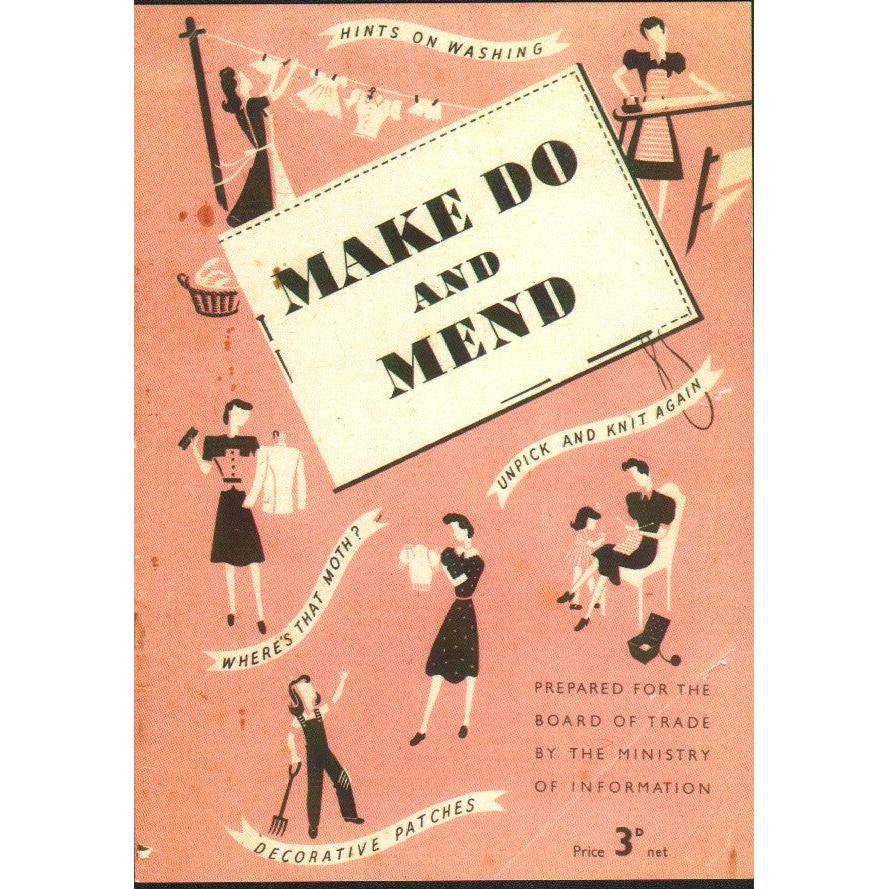
This reproduction features the iconic front cover of the "Make Do and Mend" booklet. First published by the Ministry of Information in 1943, this imagery became the face of the British government’s campaign to encourage domestic frugality. This postcard provides a factual, visual record of the "Kitchen Front" and the national effort to conserve clothing materials for the Armed Forces.
Product Specifications & Features
-
Authentic 1943 Imagery: Features the famous "Mrs. Sew-and-Sew" style aesthetic, typically depicting a character or the bold, distinctive red and black typography of the original manual.
-
Period-Correct Typography: Faithfully reproduces the official Ministry of Information fonts and the CC41 "Utility" branding often associated with wartime textiles.
-
Service-Issue Quality: Printed on heavy-duty, era-appropriate card stock that replicates the texture and weight of 1940s postal stationery.
-
Historical Accuracy: Captures the practical, no-nonsense design intended to make repair and reuse a patriotic duty rather than a sign of poverty.
Historical Context
This postcard serves as a primary-source record of the Home Front’s logistical struggle:
-
The Clothing Crisis: By 1943, raw materials like wool, cotton, and leather were diverted almost exclusively to the production of uniforms, parachutes, and boots.
-
Consumer Regulation: Reflects the era of "Clothing Coupons," where the public was legally restricted in how much new apparel they could purchase.
-
The "Utility" Scheme: Illustrates the government's move to standardize production (the CC41 mark) and educate the public on darning, patching, and "turning" old coats.
Realistic Use Cases
In line with our army surplus UK standards for functional historical resources, this item is intended for:
-
Historical Reenactment: An essential accessory for those portraying "Wartime Housewives," WVS members, or Land Army girls in 1940s displays.
-
Educational Instruction: A tactile tool for schools and museums to illustrate the history of sustainability and the domestic realities of the Second World War.
-
Museum Exhibits: A cost-effective way to display high-impact wartime graphics without risking the deterioration of a fragile original 80-year-old booklet cover.
-
Theatrical & Film Props: Period-correct set dressing for domestic interiors or notice boards in productions set between 1943 and 1945.
Condition Note: This is a high-quality modern reproduction. It is designed for active display and handling, offering a realistic look and feel where an original vintage document would be far too fragile or valuable for regular use.
Description
This reproduction features the iconic front cover of the "Make Do and Mend" booklet. First published by the Ministry of Information in 1943, this imagery became the face of the British government’s campaign to encourage domestic frugality. This postcard provides a factual, visual record of the "Kitchen Front" and the national effort to conserve clothing materials for the Armed Forces.
Product Specifications & Features
-
Authentic 1943 Imagery: Features the famous "Mrs. Sew-and-Sew" style aesthetic, typically depicting a character or the bold, distinctive red and black typography of the original manual.
-
Period-Correct Typography: Faithfully reproduces the official Ministry of Information fonts and the CC41 "Utility" branding often associated with wartime textiles.
-
Service-Issue Quality: Printed on heavy-duty, era-appropriate card stock that replicates the texture and weight of 1940s postal stationery.
-
Historical Accuracy: Captures the practical, no-nonsense design intended to make repair and reuse a patriotic duty rather than a sign of poverty.
Historical Context
This postcard serves as a primary-source record of the Home Front’s logistical struggle:
-
The Clothing Crisis: By 1943, raw materials like wool, cotton, and leather were diverted almost exclusively to the production of uniforms, parachutes, and boots.
-
Consumer Regulation: Reflects the era of "Clothing Coupons," where the public was legally restricted in how much new apparel they could purchase.
-
The "Utility" Scheme: Illustrates the government's move to standardize production (the CC41 mark) and educate the public on darning, patching, and "turning" old coats.
Realistic Use Cases
In line with our army surplus UK standards for functional historical resources, this item is intended for:
-
Historical Reenactment: An essential accessory for those portraying "Wartime Housewives," WVS members, or Land Army girls in 1940s displays.
-
Educational Instruction: A tactile tool for schools and museums to illustrate the history of sustainability and the domestic realities of the Second World War.
-
Museum Exhibits: A cost-effective way to display high-impact wartime graphics without risking the deterioration of a fragile original 80-year-old booklet cover.
-
Theatrical & Film Props: Period-correct set dressing for domestic interiors or notice boards in productions set between 1943 and 1945.
Condition Note: This is a high-quality modern reproduction. It is designed for active display and handling, offering a realistic look and feel where an original vintage document would be far too fragile or valuable for regular use.